Yes. Let us answer the question honestly and immediately, because the internet rarely does. You can absolutely get fit without a personal trainer. Millions of people have built strong, capable, healthy bodies with nothing more than free information, basic equipment and a few years of consistent effort. Anyone who tells you a trainer is mandatory is selling something.
The more useful question — the one that actually changes your decision — is not whether it is possible, but whether it is efficient for you specifically. Getting fit alone is a bit like representing yourself in a complex negotiation: entirely legal, occasionally successful, and frequently more expensive in the end than hiring someone who does it for a living. For some people the do-it-yourself route is the obvious right answer. For others — often the busy, results-oriented professionals who are most drawn to the idea of "just figuring it out" — it quietly becomes the slowest and most frustrating path available.
This article draws that line as clearly as the evidence allows. It explains who tends to succeed on their own, why motivated people still stall, what trial and error actually costs, and the specific situations where a personal trainer stops being a luxury and becomes the higher-return choice. No fear, no hype, and no claim that everyone needs coaching — because they do not.
Key takeawayYes — you can absolutely get fit without a personal trainer; plenty of people do. The more useful question is not whether it is possible but whether it is efficient for you specifically, given your knowledge, your time and how reliably you can keep yourself on track.
What "Getting Fit" Actually Requires
Before deciding whether you need help, it helps to be precise about the task. "Getting fit" is not one skill; it is the reliable execution of a small number of principles over time.
The World Health Organization's guidance for adults is a reasonable baseline: at least 150 to 300 minutes of moderate-intensity aerobic activity per week (or 75 to 150 minutes of vigorous activity), plus muscle-strengthening work on two or more days. That is the what. The reason so many people fall short of it has almost nothing to do with knowing the guideline and almost everything to do with four things: programming (choosing the right training for your goal), progression (making it harder in a structured way over time), technique (executing movements safely and effectively), and consistency (actually doing it, week after week, when life gets busy).
None of these four requires a trainer in principle. All four are where people come unstuck in practice. Keep them in mind — they are the lens for the rest of this article.
So, Who Genuinely Succeeds Without a Trainer?
Plenty of people, and it is worth being specific rather than vague about who they are.
The profile that tends to thrive alone
Self-training tends to work well for people who already have some of the underlying skills. If you played sport seriously in your teens or twenties, you likely carry a stock of movement competence and a felt sense of what real effort is. If you enjoy the process of learning a system — reading, testing, adjusting — you will happily spend the time that programming requires. And if your goal is general health and a bit of strength rather than a specific, time-bound outcome, the stakes of getting it slightly wrong are low, so trial and error costs you very little.
Add one more trait: intrinsic consistency. Some people simply do not need external accountability. They train on the Tuesday after a fourteen-hour day because not training feels worse than training. If that describes you, and your goals are moderate, you may never need to hire anyone. That is a genuine and honest conclusion, and the rest of this article should not talk you out of it.
The profile that quietly struggles
The harder cases are people who are motivated, intelligent and time-poor — which describes a large share of Dubai's professional population. They are used to being good at things, so the assumption that they can self-teach fitness is natural. But fitness rewards a specific pattern of behaviour that a demanding career actively works against: patient, unglamorous repetition, protected time, and honest self-assessment of technique they cannot see themselves performing. Intelligence does not substitute for these; sometimes it gets in the way, because smart people are very good at rationalising the skipped session.
Why Motivated People Still Fail
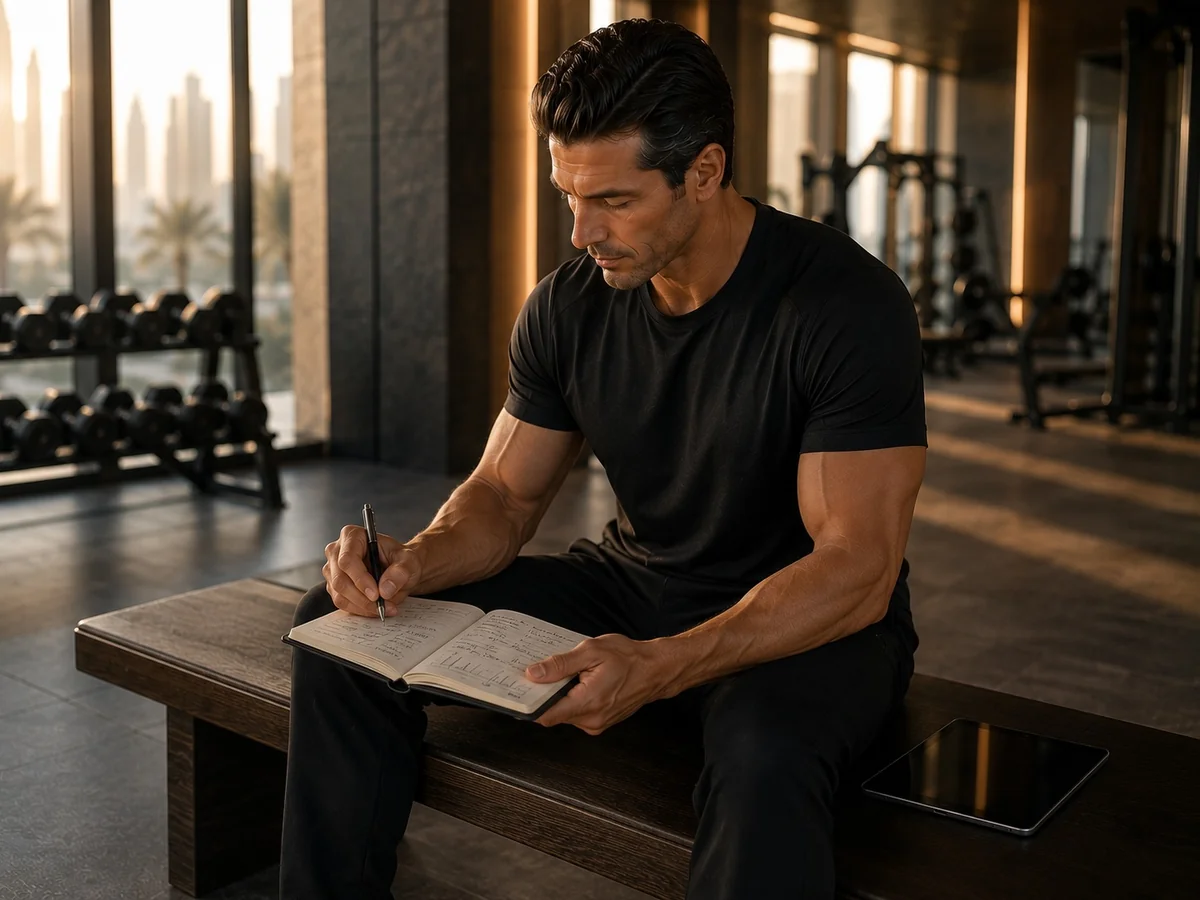
If motivation were enough, most gym memberships would not go unused. The failure points are predictable, and none of them is a character flaw.
The first is decision fatigue. Without a plan, every session begins with a question — what do I train today, how heavy, how many sets? — and after a full day of professional decisions, that small friction is often enough to send someone home. A program removes the question.
The second is the progression gap. Beginners improve on almost anything for a few months; the body is forgiving of an imperfect plan at first. Then progress stalls, because continuing to improve requires deliberately, gradually increasing the demand — a principle strength scientists call progressive overload. This is exactly the point at which most self-trainers plateau, conclude the program "stopped working," and either drift or start over. The information needed to progress is freely available; recognising when and how much to apply it to your own training, in real time, is the hard part.
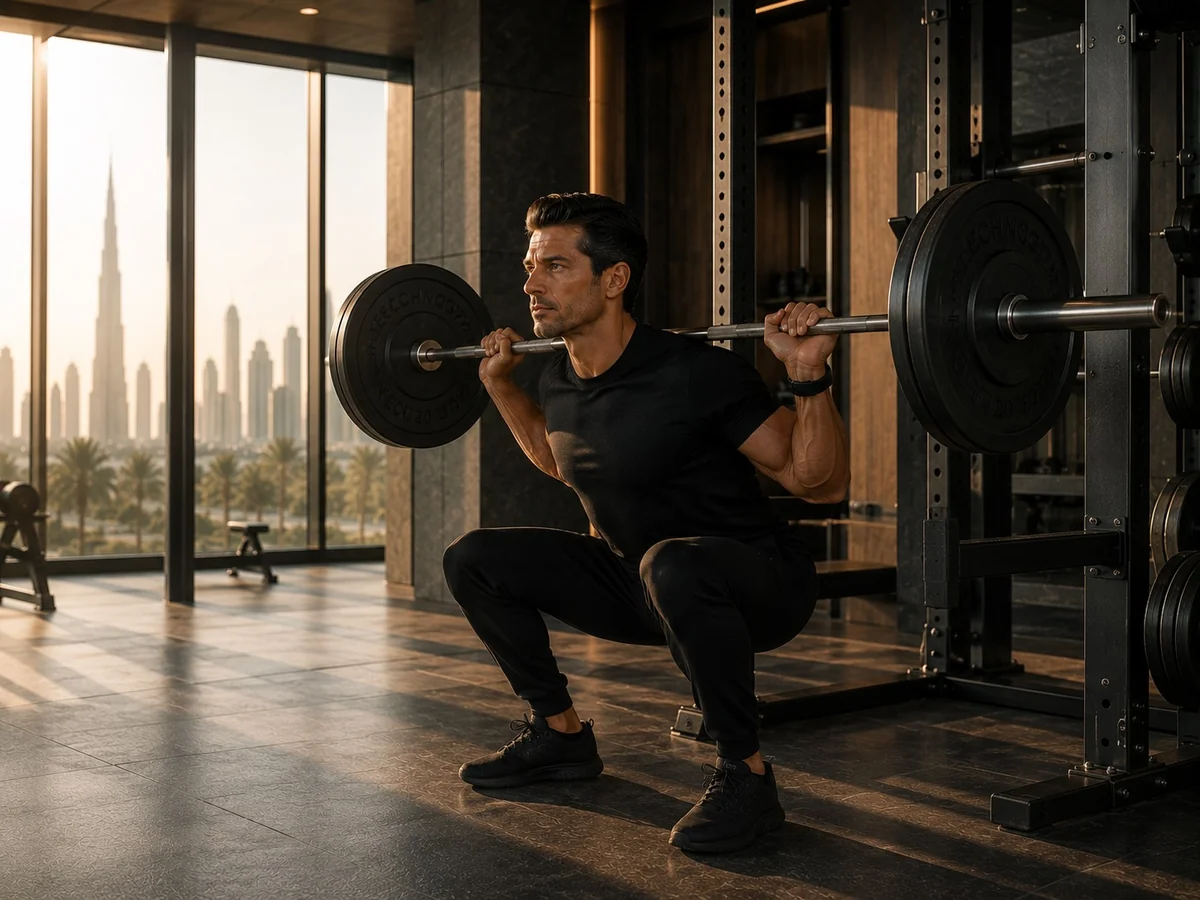
The third is technique you cannot audit. You cannot watch your own hips shift under a heavy squat or see your shoulder round at the bottom of a press. Small faults repeated hundreds of times are how a healthy person acquires a nagging injury — and an injury is the single most common reason people stop training entirely.
The fourth is the accountability vacuum. A session with no one expecting you is the easiest thing in the world to move to tomorrow, and tomorrow is where fitness goals go to die. This is not weakness; it is how humans respond to commitments with no external witness.
The Hidden Cost of Trial and Error
The do-it-yourself route looks free, or nearly so, and on a monthly basis it is cheaper. The honest accounting is different, because the real currency is not only money — it is time and forgone results.
Consider a common trajectory. Someone spends six months on a program that was never suited to their goal, sees little, loses confidence, and takes a break. They return, try something else, tweak their diet based on conflicting articles, pick up a minor shoulder issue from a movement done slightly wrong, and lose another block of time to managing it. Two years pass. They are fitter than when they started — self-training is not ineffective — but they are nowhere near where a structured two years would have taken them, and much of the frustration was avoidable.
That gap between the results you got and the results the same effort could have produced is the true cost of trial and error. For someone whose time is genuinely scarce and valuable, it is often far larger than the price of coaching would have been. This is the same logic explored in our companion piece, Is a Personal Trainer Worth It? The Real Cost vs Results in Dubai — the cheapest option per month is not always the cheapest option per result.
Information Is Not the Same as Implementation
There has never been more high-quality fitness information available, and this is precisely why the "can I do it myself?" question feels so answerable. Everything you need to know is, in some sense, a search away.
But knowledge and change are different things. Knowing that progressive overload drives strength does not tell you whether today’s set should be heavier or whether you are one poor night’s sleep away from an injury. Knowing the WHO activity target does not put the session in your calendar or protect it from a client dinner. The bottleneck for almost everyone is not information; it is implementation — translating what is known into what is done, consistently, on your own real schedule and in your own imperfect body.
A good coach is, in large part, an implementation system. The programming, the progression decisions, the technical eye and the standing appointment exist to close the gap between what you understand and what you actually do. You are not paying for secret knowledge. You are paying for reliable execution — which, for a busy person, is the scarce resource.
When a Personal Trainer Becomes a High-Return Investment
Set aside the question of need and think in terms of return. There are specific situations where hiring a coach is not an indulgence but the efficient choice, and being honest about them is more useful than pretending everyone qualifies.
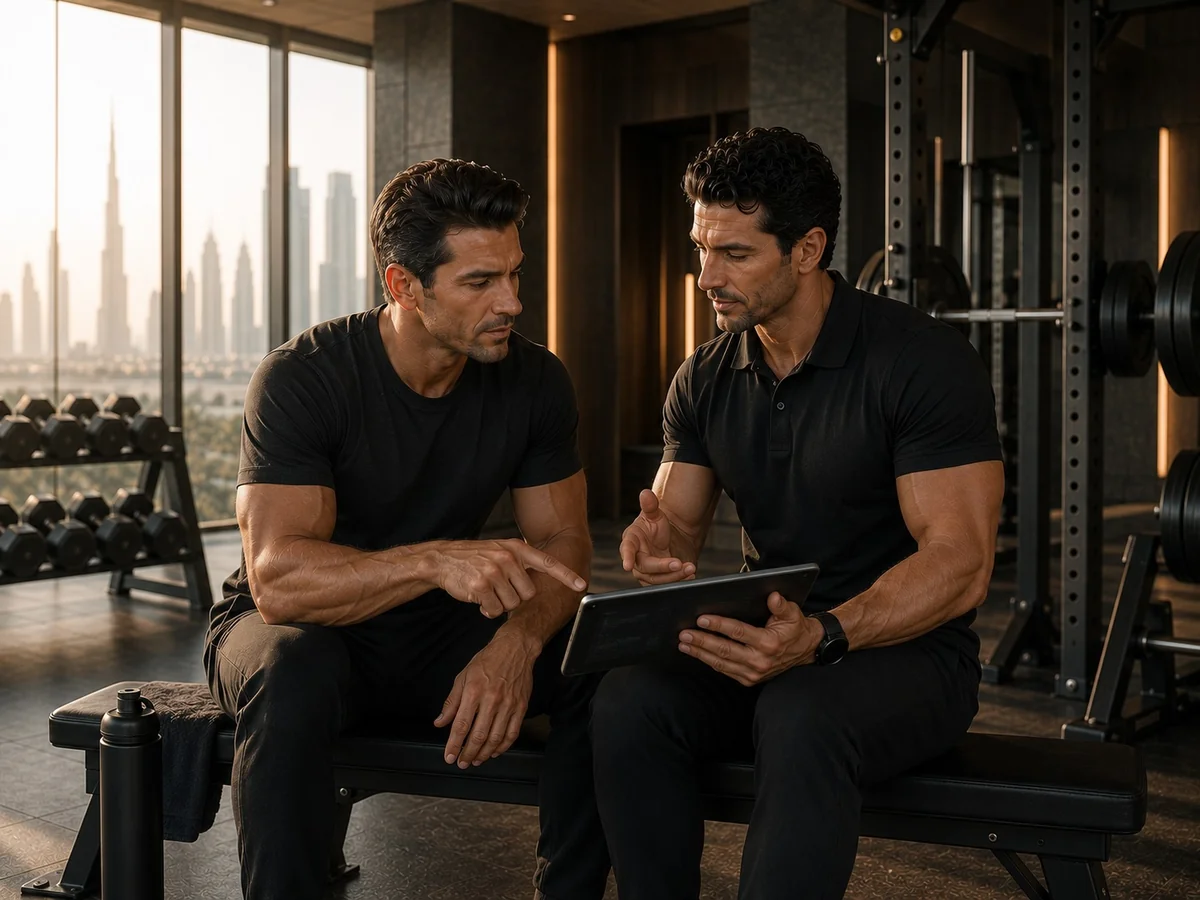
A trainer earns their fee most clearly when you have a specific, time-bound goal — a wedding, a return to sport, a medical prompt to change course — where the cost of a slow, meandering approach is real. They are worth it when you are starting from scratch and want to learn correct technique from the beginning, because unlearning ingrained faults later is far harder than learning well once. They are worth it when you have a history of injury or a medical consideration and need programming that works around it safely. And they are worth it, perhaps most of all, when your time is your genuine constraint — when the value of not wasting eighteen months on the wrong plan comfortably exceeds the cost of a coach who gets you there directly.
For readers weighing this specifically, our guide on how to choose the right personal trainer in Dubai and the questions to ask before you hire one are the natural next steps — the return on coaching depends heavily on choosing the right coach.
A Practical Middle Path
The choice is not binary, and framing it as "trainer or nothing" does readers a disservice. Between fully self-directed training and traditional in-person coaching sits a spectrum that suits a great many people.
Some hire a coach for a focused block — three months to build a foundation, learn technique and receive a program — then continue independently with far better tools. Some use online or hybrid coaching, keeping the programming, progression and accountability of a professional while training on their own schedule; we describe how that works in our overview of online performance coaching and hybrid coaching in Dubai. Others self-train for years and bring in a coach only to break a specific plateau. Each of these is a legitimate answer to "do I need a personal trainer" — and each treats coaching as a tool to be used deliberately, not a permanent dependency.
Frequently Asked Questions
Can you really get fit without a personal trainer?
Yes. Many people build genuine strength, endurance and health with free information and consistent effort over time. A trainer is not mandatory. The real question is whether self-training is efficient for your goals, experience and schedule — for some people it clearly is, and for others coaching reaches the same result far faster.
How do I know if I need a personal trainer or can train on my own?
Look honestly at four things: whether you can program your own training, progress it over time, self-correct your technique, and stay consistent without external accountability. If you manage all four and your goals are moderate, you can likely train alone. If one or more is a persistent weak point — most often consistency or progression — a coach addresses exactly that gap.
What are the biggest risks of working out without a trainer?
The common ones are plateauing because training is not progressed correctly, picking up overuse injuries from unaudited technique, and simply losing consistency in the absence of accountability. None is inevitable, but each is far more likely when no structured plan or external check exists.
Is a personal trainer worth the money if I'm on a budget?
It depends on what you are optimising. Per month, self-training is cheaper. Per result, coaching is often cheaper for time-poor people because it avoids months lost to the wrong approach. If budget is tight, a short focused coaching block or online/hybrid coaching can capture much of the value at lower cost. Our article on whether a trainer is worth it explores this trade-off in detail.
Can online or hybrid coaching replace an in-person personal trainer?
For many goals, yes. Online and hybrid coaching keep the programming, progression and accountability of a professional while you train on your own schedule. In-person coaching still has an edge for hands-on technique correction and for beginners learning complex lifts, but the gap is smaller than most people assume.
How long does it take to get fit training on my own?
There is no fixed timeline — it depends on your starting point, consistency and goals. Beginners often see clear change within a few months, followed by slower progress that requires deliberate programming to sustain. Training alone can work, but the timeline is usually longer than with structured coaching because more time goes to trial and error.
Do experienced gym-goers still benefit from a personal trainer?
Often, yes — usually to break a specific plateau, refine technique on advanced lifts, or restructure a program that has gone stale. Experienced trainees typically do not need constant supervision, but a periodic coaching block can restart progress that self-directed training has stalled on.
Choosing the Right Approach for You
So, can you get fit without a personal trainer? Yes — and for a meaningful number of people, doing it alone is the right call. If you carry real movement experience, enjoy the process of programming, hold yourself accountable without prompting, and are pursuing moderate goals with time to spare, you may never need to hire anyone, and you should feel no pressure to.
The honest exceptions are worth naming plainly. If you are time-poor and results-oriented, new to training and want to learn well, working around an injury, or chasing a specific goal on a real deadline, then self-training is not impossible — it is simply the slower, more expensive route, and coaching becomes less a luxury than a shortcut to results you would otherwise reach years later, if at all.
Decide on the honest merits of your own situation rather than on willpower or price alone. If, having weighed it, you conclude that expert guidance is the more efficient path for where you are now, that is exactly the conversation we are here for. You are welcome to book a complimentary trial session and see the difference structured coaching makes before deciding anything.
This article is educational and does not constitute medical advice. If you have a medical condition or are new to vigorous exercise, consult a qualified healthcare professional before beginning a new training program.